










In the bustling world of construction, scaffolding is more than just a temporary framework—it is the essential backbone that supports workers, tools, and materials at height. But what exactly goes into making a steel scaffold system reliable and safe? The answer lies in the materials used. Whether you are a contractor, a project manager, or a procurement professional, understanding the core materials required for steel scaffolding is critical to ensuring site safety, project efficiency, and long-term value.
The Primary Materials: Steel Grades That Matter
At the heart of every steel scaffold system are high-strength steel tubes. Not all steel is created equal, and the grade of steel directly determines a scaffold's ability to bear loads, resist environmental wear, and maintain structural integrity over time.
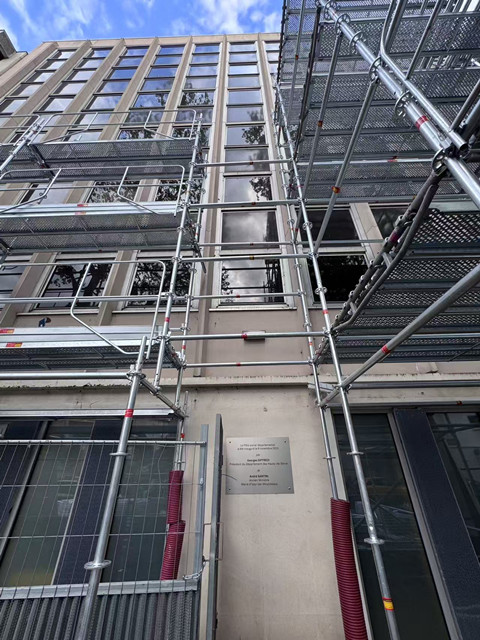
The most widely used steel grades in scaffolding are Q235 and Q355 (with Q355 being the higher-grade evolution of Q345). Q235 is a carbon structural steel widely used for general-purpose scaffold components such as horizontal ledgers and frame crossbars, offering good weldability and cost-effectiveness. Q355, by contrast, is a low-alloy high-strength steel with a higher yield point, making it essential for load-bearing vertical standards in demanding projects. Together, these two grades form the material foundation of reliable scaffolding systems.
Tube Dimensions and Performance
Beyond steel grade, physical dimensions are equally critical. The standard specification for scaffolding steel tubes is 48.3mm outer diameter with a wall thickness of 3.2mm or 3.6mm. In the Chinese market, Φ48.3×3.6mm is the recommended specification according to national standards GB/T13793 and GB/T3091.
What do these numbers mean in practice? For Q235 steel, the yield strength reaches at least 235 MPa with a tensile strength of 375 – 500 MPa; for Q355, the figures are even more impressive—yield strength starts at 355 MPa, climbing to as high as 680 MPa in certain grades. This material science translates directly into field performance: stronger steel means safer scaffolds, longer service life, and greater resistance to the twists and fatigue of repeated use.
International Standards
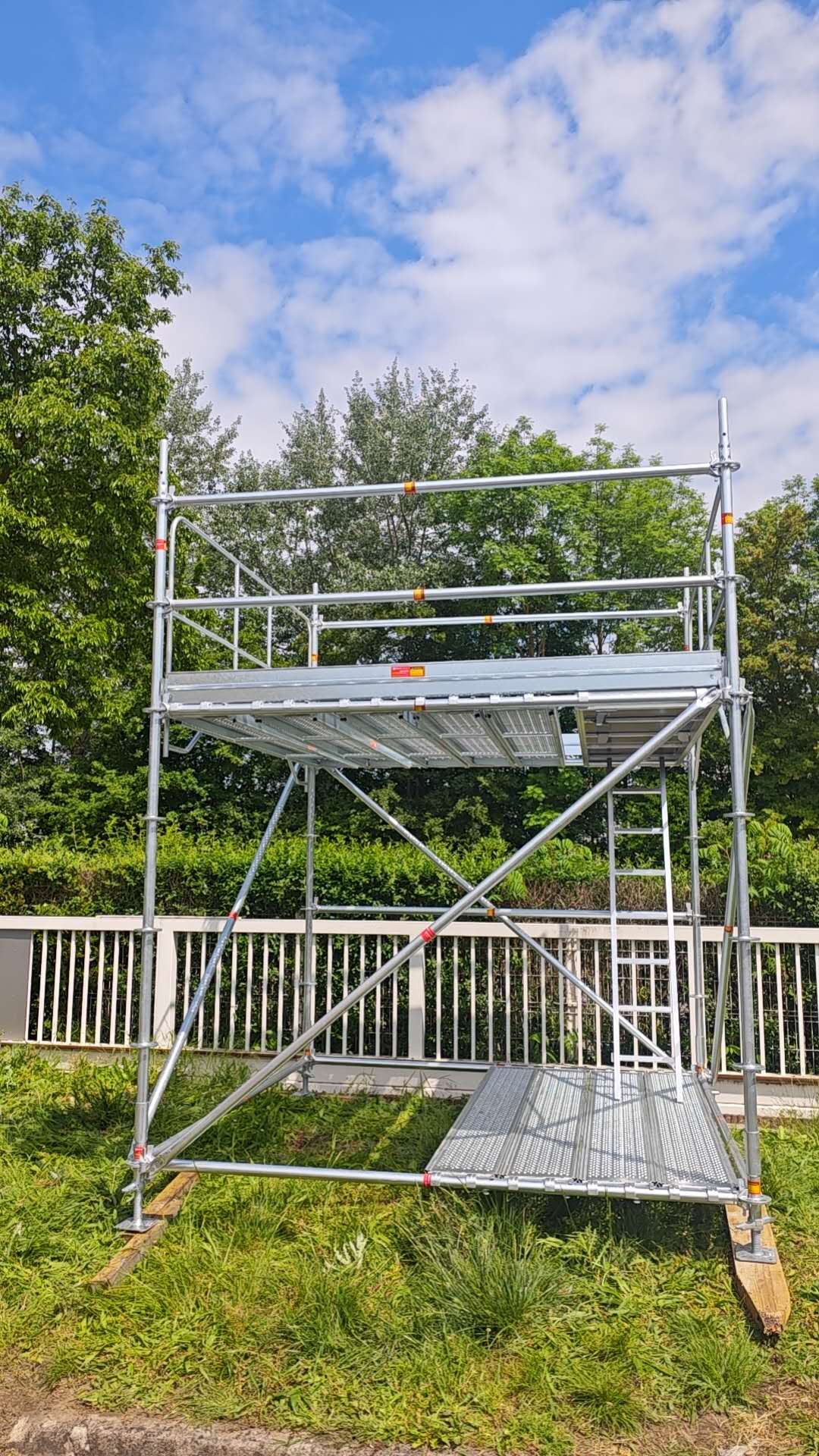
Scaffolding materials must also comply with various international standards depending on the project location:
Standard | Applicable Region | Key Requirements |
EN 10219 | European Union | Cold-formed welded hollow sections for structural applications |
BS 1139 | United Kingdom | Metal scaffolding tubes, couplers, and fittings |
AS/NZS 1576 | Australia / New Zealand | Scaffolding safety and performance standards |
ASTM A36 | North America | Minimum yield of 250 MPa for structural steel |
GB/T 13793 | China | Straight seam electric welded steel pipes |
GB/T 700 | China | Carbon structural steel material requirements |
Each set of standards specifies not only the steel's chemical composition and mechanical properties, but also testing protocols for impact toughness, weldability, and fatigue resistance. This global framework helps buyers make informed decisions when sourcing scaffolding for projects in different regulatory environments.
The ADTO Commitment
ADTO Group stands out as a manufacturer that not only understands these material requirements but consistently delivers products that meet and exceed them on a global scale. Here is how ADTO translates material science into real-world scaffolding solutions:
Premium Steel Selection: ADTO manufactures its scaffolding systems using high-strength Q235 and Q355B steel, carefully sourcing raw materials to ensure consistent grade compliance across every production batch. By using premium-grade steel as the foundation, ADTO ensures that its scaffolding products have the structural integrity required for demanding construction environments.
Advanced Manufacturing Processes: ADTO employs mechanically welded construction techniques to produce robust and durable scaffolding components. The company's ringlock and cuplock systems are manufactured using Q235/Q345 ERW (electric resistance welded) steel, and ADTO has mastered the art of hot-dip galvanizing to deliver superior corrosion resistance. This metallurgically bonded zinc coating dramatically extends the usable life of scaffolding, particularly in moisture-prone or coastal environments.
Global Certifications: ADTO products are certified to meet rigorous international requirements, including EN 12811-1, AS/NZS 1576, CE, ISO 9001, SGS, and TUV. These certifications provide procurement professionals with documented assurance that ADTO's materials and manufacturing processes meet the highest global benchmarks.
Strategic Material Sourcing: With multiple production bases and an integrated supply chain, ADTO maintains strict control over raw material quality. The company's large-scale operations (over 400,000 square meters of factory space with annual capacity reaching 30,000 tons) enable consistent quality and reliable delivery for projects of any scale.
Proven Performance: From the Burj Khalifa to major infrastructure projects across more than 100 countries, ADTO scaffolding materials have been field-tested in some of the world's most demanding construction environments. This global track record demonstrates that ADTO's commitment to material quality translates into real-world reliability.
Making an Informed Choice
Selecting the right materials for steel scaffolding is not merely a matter of ticking boxes on a specification sheet—it is a strategic decision that directly impacts worker safety, project timelines, and long-term costs. Inferior steel grades or substandard manufacturing processes can lead to corrosion, structural weakness, and ultimately, catastrophic failure.
For buyers looking to make a sound investment, ADTO offers a compelling combination: premium Q235 and Q355 steel, advanced hot-dip galvanizing technology, comprehensive global certifications, and a proven track record of excellence. In the world of steel scaffolding, the materials you choose truly determine the strength of the foundation upon which safety is built.

