










In the fast-paced world of construction, efficiency and safety must go hand in hand. Kwikstage scaffolding has earned its reputation as one of the most versatile and rapidly erectable modular scaffolding systems available today. Named for its speed of assembly, Kwikstage is defined by its unique wedge-fixing system, where every component fits together without the need for loose fittings, spanners, or bolts. This design not only accelerates installation but also reduces human error, offering a safer and more user-friendly assembly process.
However, as with any scaffolding system, safety is not automatic—it must be engineered, inspected, and enforced. This guide provides a comprehensive overview of Kwikstage scaffolding safety from a professional perspective, covering key risks, best practices, and why partnering with a manufacturer like ADTO Group makes a measurable difference.
Understanding the System and Its Risks
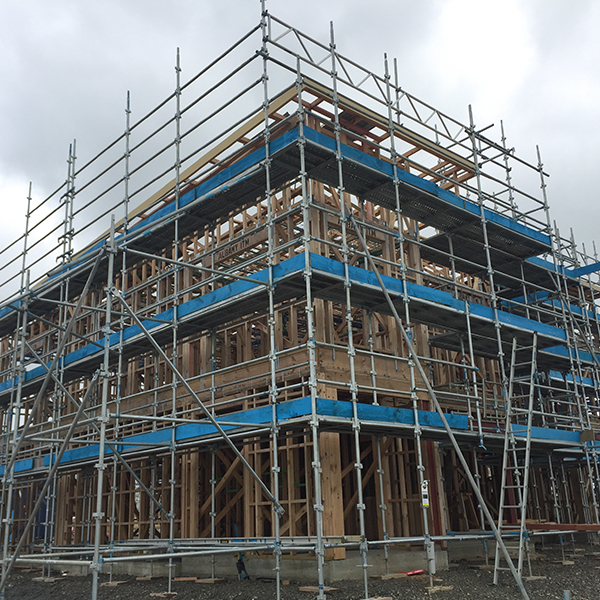
Kwikstage scaffolding consists of vertical standards with welded V-pressings at standard intervals, horizontal ledgers with wedge heads that lock into these pressings, transoms that support working platforms, diagonal braces for stability, and steel boards with non-slip surfaces. The wedge-lock mechanism is designed to prevent accidental disconnection, providing a secure and stable structure.
When used correctly, Kwikstage scaffolding is a safe and reliable system. However, several common risks can compromise safety:
Incorrect Assembly: Improper installation can compromise stability. Kwikstage scaffolding must be erected in accordance with the manufacturer’s instructions.
Overloading: Exceeding the weight capacity can cause structural failure. Kwikstage is designed to support its own weight and at least four times the maximum intended load, but load limits must be strictly observed.
Poor Maintenance: Rust, loose connections, or damaged components can weaken the structure.
Unstable Ground: Scaffolding must be placed on a firm, level foundation.
The Safety Framework: A Step-by-Step Approach
Phase 1: Pre-Erection Planning
Safety begins before a single component is placed on site.
Site Assessment: A competent person must evaluate the ground to ensure it is firm, level, and capable of supporting the scaffold's load. Sole boards should be used to distribute weight and prevent standards from sinking.
Component Inspection: All standards, ledgers, braces, and boards must be checked for damage—including dents, bends, cracks, and corrosion. Damaged components should never be used.
Team Competence: Only trained and certified personnel should erect, alter, or dismantle Kwikstage scaffolding. Ledgers and transoms must never be used as handrails or edge protection unless both ends are securely fastened.
Phase 2: Erection and Installation
The erection of Kwikstage scaffolding follows a precise and repeatable sequence.
Base Setup: Standards are inserted into base jacks and adjusted to ensure the scaffold is perfectly level.
Standards and Ledgers: Standards are erected vertically, and ledgers are connected using the wedge-lock mechanism. Each connection must be securely locked in place.
Transoms and Platforms: Transoms are installed to support the working platform, and steel boards are laid securely.
Diagonal Braces: Braces are critical for stability and rigidity, preventing the scaffold from swaying or collapsing sideways.
Guardrails and Toe Boards: These must be installed around the perimeter of the scaffolding to prevent falls.
Phase 3: Securing and Tying
For high-rise or exposed projects, scaffolding must be tied to the building or structure at multiple points to prevent swaying or tipping. Wall tie brackets—such as those manufactured by ADTO—are bolted into the structure to secure the scaffold.
Phase 4: Ongoing Inspection and Maintenance
Regular inspections are non-negotiable.
Pre-Shift Inspections: Scaffolding should be inspected before each shift. Inspectors should check for signs of wear, rust, loose connections, or any movement when pressure is applied.
Post-Weather Inspections: After extreme weather conditions—high winds, storms, or heavy rain—scaffolding must be re-inspected.
Maintenance: Loose bolts should be tightened, moving parts greased, and worn components replaced promptly.
Phase 5: Safe Access and Work Practices
Workers should use designated access points, such as ladder bays, and never jump onto or off the platform. The work area must be kept clean to prevent tripping hazards. All workers should wear appropriate PPE, including hard hats, high-visibility clothing, safety harnesses, and non-slip footwear.
Why ADTO Group Is the Right Partner for Kwikstage Safety
ADTO Group, founded in 1998, is a leading manufacturer and supplier of Kwikstage scaffolding, with a proven track record of quality, safety, and reliability.
Manufacturing Strength: ADTO operates four advanced manufacturing bases equipped with state-of-the-art production lines. With over 2,000 skilled workers and more than 40,000 square metres of factory space, ADTO is one of the largest scaffolding manufacturers in China. Its Kwikstage systems are produced using Q235 and Q345 high-strength steel, with hot-dip galvanized finishes that provide exceptional corrosion resistance and long-term durability.
Quality Assurance: ADTO's Kwikstage scaffolding complies with rigorous international standards, including AS/NZS 1576, CE, ISO 9001, SGS, and BV certifications. These certifications provide buyers with documented assurance that every component meets or exceeds global safety benchmarks.
Safety by Design: ADTO's Kwikstage systems feature the industry-standard wedge-lock mechanism, non-slip platforms, and integrated guardrail points. The modular design eliminates loose fittings, reducing the risk of lost components and assembly errors.
Global Track Record: ADTO has supplied Kwikstage scaffolding to projects across more than 50 countries and regions, serving over 5,000 international buyers. This extensive experience ensures that ADTO understands the diverse safety requirements and regulatory landscapes of different markets.
Conclusion
Kwikstage scaffolding offers exceptional speed, versatility, and structural integrity—but these benefits are only realised when safety is prioritised at every stage. From pre-erection planning and proper assembly to regular inspections and secure tying, a disciplined approach to safety is essential.
For procurement professionals and contractors seeking a reliable partner, ADTO Group combines manufacturing scale, international certifications, and a demonstrated commitment to quality and safety. With ADTO Kwikstage scaffolding, you are not just investing in a system—you are investing in the safety and success of your project.

