










Steel scaffolding is the skeleton of modern construction—designed to bear immense loads, weather environmental exposure, and ensure worker safety at height. But not all steel is created equal, and understanding the precise material requirements for different scaffold components is essential for engineers, procurement professionals, and project managers alike. From a professional perspective, selecting the right steel grades is not merely a specification exercise; it is a matter of structural integrity, regulatory compliance, and long-term value.
The Material Pyramid: Matching Steel Grade to Component Function
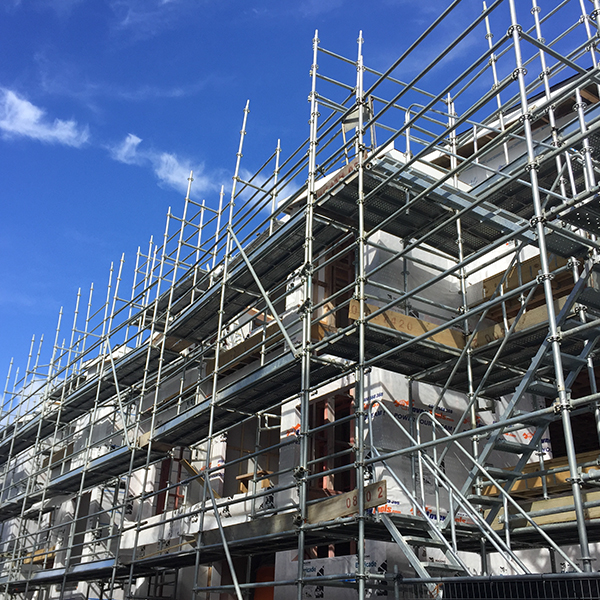
Modern scaffolding systems employ a scientifically graded approach to material selection. The industry standard configuration—Q355B for uprights, Q235 for horizontal bars, and Q195 for diagonal braces—is not arbitrary. It represents a precision-engineered balance of load-bearing capacity, cost efficiency, and safety performance.
The letters and numbers in each steel grade convey specific mechanical property indications. Q represents the Chinese pinyin initial for "yield strength," followed by a numerical value in MPa. The higher the number, the greater the steel's yield strength and load-bearing capacity. The suffix B denotes the quality grade, indicating that the chemical composition and impact performance meet corresponding requirements.
Uprights (Vertical Load-Bearing Members)
Scaffold uprights are the only vertical load-bearing core of the system, bearing all primary loads from the structure, formwork, concrete, and construction activities. They are classified as core load-bearing components of high-risk projects and, under mandatory national standards, the material for uprights must not be lower than Q345—a standard effectively satisfied by Q355B low-alloy high-strength steel.
The performance advantages of Q355B are substantial. It delivers a yield strength of 355MPa, significantly higher than ordinary carbon steel, along with excellent plasticity, toughness, and low-temperature impact resistance, eliminating the risk of brittle fracture. Actual load testing has demonstrated remarkable capacity: type B uprights achieve a single ultimate bearing capacity of 99.1kN (approximately 10.1 tons), while heavy-duty type Z uprights reach 136.5kN (approximately 13.9 tons). This capacity fully meets the demands of large-scale projects, including high-support formwork, bridges, and elevated structures.
The engineering consequence of material downgrading is severe. If uprights are manufactured from Q235 instead of Q355B, the yield strength decreases by 34% (from 355MPa to 235MPa), the theoretical load-bearing capacity drops to approximately 65kN, and the component fails to meet the requirements of the JG/T 503 standard. The risk of scaffold collapse increases dramatically.
Horizontal Bars (Connecting Members)
Horizontal bars primarily bear tensile and shear forces, with loads typically only one-fifth to one-third of those carried by the uprights. For these components, Q235 ordinary carbon structural steel is both sufficient and optimal. With a carbon content of 0.12% to 0.20%, Q235 offers balanced comprehensive performance, good weldability, and moderate cost—perfectly suited to the functional positioning of horizontal bar connection and bracing, delivering the best cost performance available.
Diagonal Braces (Auxiliary Stabilizers)
Diagonal braces serve as auxiliary members, solely stabilizing the scaffold structure and preventing tipping. The loads they carry are minimal, making them suitable for Q195 low-carbon structural steel. With excellent toughness and ease of processing, Q195 satisfies auxiliary stabilization requirements while maximizing component cost control—typically reducing total steel costs by 20% to 30% compared to uniform high-strength specifications.
Dimensional Standards and Tube Specifications
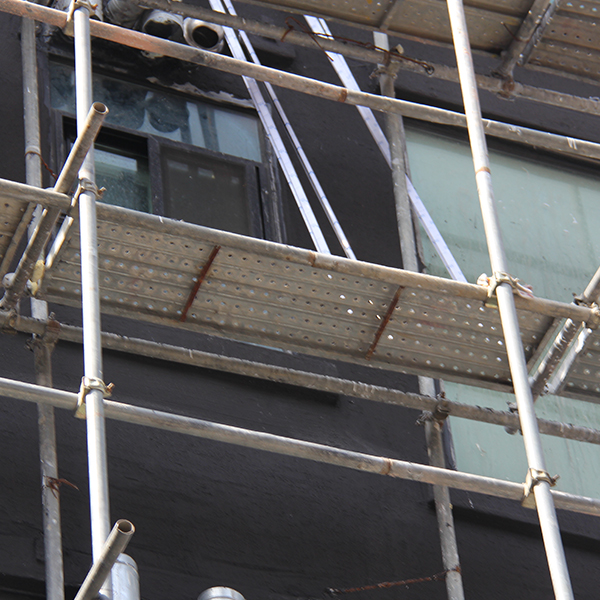
Beyond steel grade, physical dimensions are critical to scaffold performance. The industry-standard outer diameter for scaffold steel tubes is 48.3mm, with wall thickness options typically including 3.2mm (Type 3) and 4.0mm (Type 4). The 48.3mm×3.6mm specification is also widely recognized in the market.
Wall thickness directly influences load-bearing capacity and safety factors. As the slenderness ratio and material strength relationship demonstrates, a thicker wall design yields a higher stability coefficient—type B uprights (Φ48×3.2mm) achieve a stability coefficient φ=0.350, while heavy-duty type Z uprights (with thickened pipe walls) achieve φ=0.516.
International Standards: A Global Compliance Framework
Scaffolding materials must comply with various international standards depending on project location. The most commonly referenced standards include:
Standard | Applicable Region | Material / Dimensional Requirements |
EN 10219 | European Union | Cold-formed welded structural hollow sections |
BS 1139 | United Kingdom | Metal scaffolding tubes, couplers, and fittings |
EN 39 | European Union | Loose steel tubes for tube and coupler scaffolds |
ASTM A36 / A53 | North America | Structural steel with minimum yield of 250 MPa |
AS/NZS 1576 | Australia / New Zealand | Scaffolding safety and performance |
GB/T 13793 | China | Straight seam electric welded steel pipes |
Steel grades have equivalent designations across different standards. For example, Q235 correlates to S235 under European standards, and Q355B corresponds to S355, indicating similar yield strength and mechanical properties. These equivalencies enable global procurement while maintaining consistent quality benchmarks.
Surface Protection: Hot-Dip Galvanizing
Steel's natural vulnerability to corrosion demands effective surface protection. Hot-dip galvanizing (HDG) has emerged as the industry gold standard, creating a metallurgical bond between zinc and steel that provides sacrificial protection even if the surface is scratched.
HDG offers a corrosion-resistant service life typically exceeding 15 to 20 years in standard construction environments, making it the preferred finish for scaffolding components exposed to moisture, coastal conditions, or repeated use. The process is governed by international standards such as EN ISO 14713, which provides guidelines for corrosion protection of iron and steel in structures. For buyers prioritizing longevity and minimal maintenance, HDG is an essential specification.
ADTO Group: Manufacturing Excellence Through Material Mastery
ADTO Group has positioned itself as a leading manufacturer of steel scaffolding components, grounded in a deep understanding of material science and engineering requirements. With nearly 300 sets of advanced manufacturing and processing equipment, ADTO achieves an annual production capacity of 60,000 tons of steel planks and 150,000 tons of scaffolds.
The company's vertical integration is particularly noteworthy. Xiang Jia Steel, one of ADTO's subsidiaries, operates 6 ERW steel tube production lines, 2 hot-dipped galvanizing lines, and 4 hollow section production lines, with an annual capacity of 100,000 metric tons. ADTO's scaffolding tubes are available in Q355, Q235, and STK400/STK500 grades, with outer diameters of 48.3–48.6mm, wall thicknesses ranging from 2.2mm to 4.0mm, and lengths from 0.5m to 6.5m.
ADTO's scaffolding material compliance is validated by a robust certification portfolio, including ISO 9001, CE, AS/NZS 1576, EN 12811-1, EN 131, JIS, and RISE. The company has earned designation as a supplier to world-renowned petrochemical enterprises such as PetroChina and Sinopec, demonstrating its capability to meet the most rigorous quality standards.
Beyond production capacity, ADTO's hot-dip galvanizing technology ensures superior corrosion resistance, with finished products achieving a service life of up to 20 years. The company has been deeply engaged in the field of engineering equipment and materials for over two decades, serving more than 60,000 global customers across 100+ countries and regions. This extensive track record, combined with advanced automatic electric digital welding equipment and strict adherence to ISO quality management standards, provides procurement professionals with confidence in material integrity and component reliability.
Conclusion
From a professional perspective, steel scaffolding material selection follows a clear scientific logic: Q355B low-alloy high-strength steel for load-bearing uprights, Q235 carbon structural steel for connecting horizontal bars, and Q195 low-carbon steel for auxiliary diagonal braces. This graded approach delivers optimal safety, structural performance, and cost efficiency.
Buyers must remain vigilant against inferior manufacturers that use Q235 steel to substitute for Q355B in upright applications—a practice that drastically compromises structural integrity and may result in scaffold deformation or collapse. All components should be validated by material test reports and national standard certifications.
For projects demanding uncompromising material quality, international certification compliance, and integrated manufacturing capability, ADTO Group represents a trusted partner. Through precise steel grade selection, advanced hot-dip galvanizing, and full-spectrum production control, ADTO ensures that the steel forming the skeleton of your construction project is not merely adequate—it is engineered to excel.

