










Scaffolding is one of the most essential yet potentially hazardous systems on any construction site. According to OSHA, scaffolding violations consistently rank among the most frequently cited standards in the construction industry. Ensuring scaffolding safety is not merely a regulatory obligation—it is a fundamental responsibility that protects lives, prevents injuries, and safeguards project timelines.
This guide outlines the critical safety requirements for scaffolding use, from design and erection to inspection and daily operation, and highlights how partnering with a quality manufacturer like ADTO Group can help meet these demanding standards.
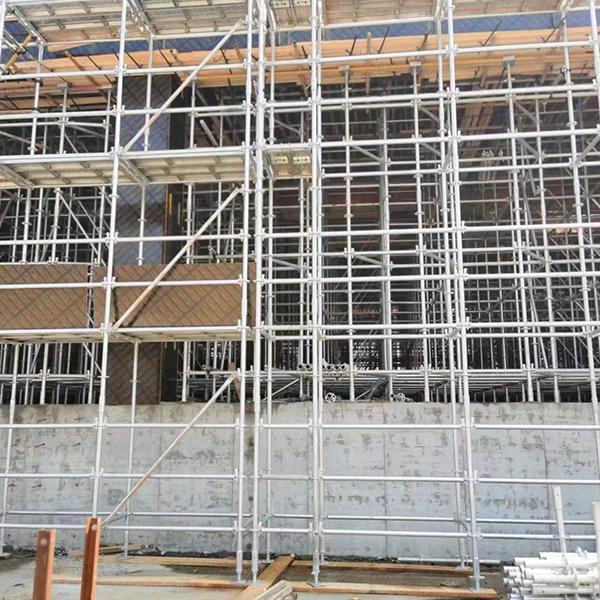
1. Regulatory Framework and Standards
Scaffolding safety is governed by a comprehensive framework of international and national standards. In the United States, OSHA 29 CFR 1926 Subpart L establishes the primary requirements for scaffolds in construction. Key provisions include:
29 CFR 1926.451 – General requirements for scaffolds
29 CFR 1926.452 – Additional requirements for specific scaffold types
29 CFR 1926.454 – Training requirements for scaffold users
Internationally, standards such as EN 12811 (Europe), AS/NZS 1576 (Australia/New Zealand), and GB 55023-2022 (China) provide equivalent frameworks. The Chinese GB 55023-2022 "General Code for Construction Scaffolding" is a mandatory national standard with all provisions strictly enforceable.
2. Design and Load-Bearing Requirements
Every scaffold must be designed by a qualified person and constructed in accordance with that design. The fundamental safety principle is the 4:1 safety factor:
Each scaffold and scaffold component must support, without failure, its own weight and at least four times the maximum intended load applied or transmitted to it.
This safety factor applies to:
The scaffold structure itself
All support devices and foundations
Platforms, guardrails, and bracing systems
For scaffolds exceeding a 4:1 height-to-base width ratio, they must be secured against tipping through guying, bracing, or tying to a solid structure. Ties and braces must be installed at each end of the scaffold and at horizontal intervals not exceeding 30 feet (9.1 metres).
3. Fall Protection Systems
Falls are the leading cause of fatalities in construction, making fall protection a non-negotiable requirement.
Guardrail Systems: Any scaffold platform at a height of 2 metres (approximately 6 feet) or more must be equipped with full guardrails. A standard guardrail system consists of:
A top rail capable of supporting at least 200 pounds (90 kg)
A midrail
Toeboards to prevent tools and materials from falling
Personal Fall Arrest Systems: When guardrails are not feasible or are temporarily removed, workers must use safety harnesses and lifelines. Employers are required to provide training that enables workers to recognize fall hazards and understand control measures.
4. Safe Access and Egress
Workers must have safe and secure access to all scaffold levels. OSHA requires that employees can safely access any scaffold level that is 2 feet above or below an access point. Access methods include:
Stair towers with proper handrails
Ladders securely fastened and extending at least 1 metre above the landing platform
Integral access points designed into the scaffold system
5. Inspection Requirements
Regular inspection by a competent person is one of the most critical safety requirements. A competent person is defined as someone who can identify existing and predictable hazards and has the authority to take prompt corrective action.
Inspection schedule:
Before initial use – Full inspection by a competent person
Before each work shift – Daily inspection
After any modification, adverse weather, or seismic event – Re-inspection
At least every 30 days – Regular periodic inspection
Inspection checklist should include:
Missing or damaged components
Loose connections and missing wedges or pins
Signs of corrosion, deformation, or fatigue
Secure ties to the building or structure
Properly secured guardrails and toe boards
Firm, level foundation with no standing water or looseness.
A written report must be prepared by the competent person for each inspection.
6. Training Requirements
OSHA mandates that all employees who perform work on scaffolds must receive training from a qualified person. Training must cover:
Hazard recognition – Electrical, fall, and falling object hazards
Proper scaffold use – Including handling of materials on the scaffold
Load capacities – Maximum intended load and the scaffold's load-carrying capacity
Safe access and egress methods
Proper use of personal protective equipment (PPE)
7. Platform and Decking Requirements
All working platforms must be fully planked or decked between the front uprights and guardrail supports. Key requirements include:
Platforms must be at least 18 inches (46 cm) wide
Gaps between planks must be minimized to prevent falls
All loose materials must be removed from the scaffold at the end of each shift
8. Special Considerations
Erection and Dismantling: Scaffolds must be erected, altered, and dismantled under the supervision of a qualified person. Modern best practices recommend the "one-metre lift method" and "advanced guardrail" techniques over sequential erection for enhanced safety.
Environmental Factors: After exposure to high winds, storms, heavy rain, or seismic tremors, scaffolds must be re-inspected before use.
Site Inductions: Scaffold safety should be a regular topic in site inductions and toolbox talks, emphasizing that workers should not access incomplete sections or alter the scaffold without proper authorization.
ADTO Group: Building Safety into Every Component
Meeting these rigorous safety requirements begins with quality scaffolding manufactured to the highest standards. ADTO Group has established itself as a trusted partner for construction professionals worldwide, with a commitment to safety embedded in every product.
International Certifications: ADTO's scaffolding systems are certified to meet ISO 9001, CE, AS/NZS 1576, EN 12811-1, EN 131, JIS, RISE, SGS, and BV standards. These certifications provide documented assurance that ADTO products comply with the most stringent global safety and quality regulations.
Manufacturing Excellence: With four production bases spanning over 400,000 square metres and 23 dedicated scaffolding production lines, ADTO manufactures its systems using Q235 and Q345 high-strength steel with hot-dip galvanized finishes that deliver exceptional corrosion resistance and a service life exceeding 15 years.
Safety by Design: ADTO's scaffolding systems feature:
Secure locking mechanisms that eliminate loose fittings
Integrated guardrail points for easy fall protection installation
Non-slip platforms for enhanced worker stability
High load capacity meeting the 4:1 safety factor requirement
Global Track Record: ADTO serves as a designated supplier to world-renowned enterprises including PetroChina and Sinopec, with products exported to more than 100 countries and regions. This extensive experience ensures that ADTO understands and meets the diverse safety requirements of different regulatory environments.
Conclusion
Scaffolding safety is a multi-faceted discipline that demands compliance with rigorous standards, meticulous inspection, comprehensive training, and quality equipment. From the 4:1 safety factor in design to daily competent person inspections and fall protection systems, every requirement serves the same purpose: protecting the lives of workers at height.
When selecting scaffolding for your project, the choice of manufacturer matters. ADTO Group combines international certifications, substantial manufacturing capacity, and a demonstrated commitment to quality—ensuring that the scaffolding supporting your workforce meets the highest safety standards. After all, quality determines safety, and safety is the hard truth of every construction site

