










From a buyer's point of view, small scaffolding components often have a big impact on project safety, efficiency, and cost. Among these components, base jacks and screw jacks are frequently discussed, compared, and sometimes misunderstood. Although they look similar and are both used for height adjustment and load transfer, their functions, applications, and value on site are clearly different. Understanding these differences is essential for making the right purchasing decisions and avoiding unnecessary risks or overspending.
Based on procurement experience across multiple construction and industrial projects, this article explains the difference between base jacks and screw jacks from a buyer’s practical perspective.
Understanding the Purpose of Jacks in Scaffolding
In any scaffolding system, jacks serve two main purposes:
Load transfer-safely transferring the weight of the scaffold, workers, and materials to the ground or supporting structure.
Height adjustment–compensating for uneven ground, sloped surfaces, or elevation differences.
However, base jacks and screw jacks are designed to solve different problems within the scaffolding structure.
What Is a Base Jack?
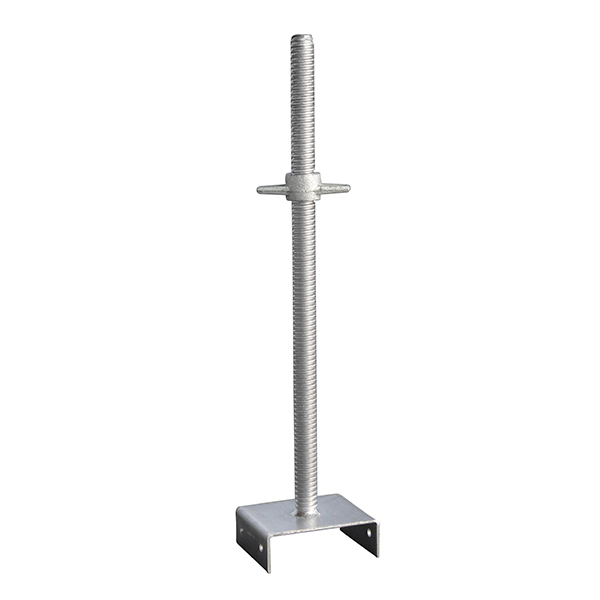
A base jack (also known as an adjustable base jack) is installed at the bottom of the scaffolding system. It consists of a threaded steel rod welded to a flat base plate, which sits directly on the ground or sole board.
Key Characteristics of Base Jacks
Installed at the ground level
Used to level the scaffold on uneven surfaces
Supports the entire vertical load of the scaffolding structure
Typically used with system scaffolding such as Ringlock, Cuplock, or Frame scaffolds
Buyer's View: Why Base Jacks Matter
From a buyer's standpoint, base jacks are non-negotiable safety components. Even a high-quality scaffolding system can become unsafe if the load is not evenly distributed at the base. Base jacks allow precise leveling, which:
Reduces stress on vertical standards
Improves overall scaffold stability
Helps meet safety inspection requirements
Buyers usually specify high load capacity, thick base plates, and galvanized or painted finishes to ensure durability, especially on long-term or outdoor projects.
What Is a Screw Jack?
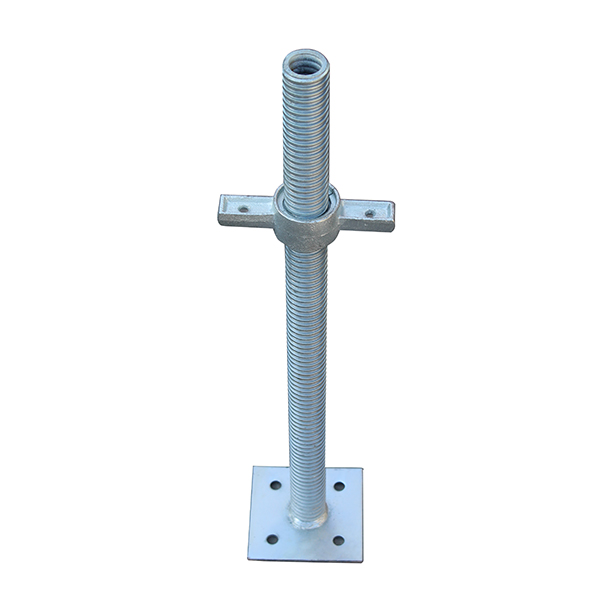
A screw jack is generally used at the top of the scaffolding system or within formwork support structures. It also features a threaded rod, but instead of a flat base plate, it often includes a U-head or fork head.
Key Characteristics of Screw Jacks
Installed at the top of scaffolding or shoring systems
Used to support beams, formwork, or slabs
Allows fine vertical adjustment for precise height control
Commonly used in concrete formwork and slab support
Buyer's View: Why Screw Jacks Are Different
From a procurement perspective, screw jacks are more about precision and alignment than ground stability. In concrete pouring or heavy-duty shoring applications, even small height differences can lead to structural defects. Screw jacks provide:
Accurate elevation control
Strong vertical load-bearing performance
Compatibility with U-heads for beams and timber supports
Buyers often focus on thread quality, safe working load, and adjustment range when selecting screw jacks.
Key Differences Between Base Jack and Screw Jack
Aspect Base Jack Screw Jack
Position in scaffold Bottom Top or support level
Main function Leveling and load transfer to ground Height adjustment and beam support
Common head type Flat base plate U-head or fork head
Typical applications Scaffolding foundations Formwork and shoring
Buyer priority Stability and durability Precision and load capacity
From a buyer's point of view, confusing these two components can lead to incorrect installation, safety risks, or project delays.
How Buyers Decide Which One to Use
Experienced buyers do not choose between base jacks and screw jacks as alternatives—they choose them as complementary components.
For scaffolding access systems, base jacks are essential at the bottom, while screw jacks may not be required.
For formwork and slab support, screw jacks are critical, often used together with shoring frames or Ringlock systems.
For industrial projects, both are commonly specified to handle uneven ground and complex load paths.
A buyer's responsibility is to ensure that the right jack is used in the right position, with proper load ratings and material quality.
Common Buying Mistakes to Avoid
From experience, buyers should avoid these common issues:
Selecting jacks based on price only, ignoring load capacity
Mixing low-quality jacks with high-standard scaffolding systems
Using screw jacks where base jacks are required, or vice versa
Failing to consider corrosion resistance in harsh environments
Reliable suppliers usually provide clear technical data and guidance, which helps buyers make correct decisions.
Final Thoughts
From a buyer's perspective, the difference between a base jack and a screw jack is not just technical—it directly affects safety, efficiency, and project performance. Base jacks are designed to create a stable and level foundation, while screw jacks are used for precise height adjustment and load support at higher levels.
Understanding these roles helps buyers specify the correct components, reduce on-site risks, and avoid unnecessary costs. In scaffolding and formwork systems, choosing the right jack is a small decision with major consequences—and informed buyers always treat it accordingly.

